Your $1,500 Jackpot Doesn't End at the Machine: A No-Panic Walk Through Slot Tax Paperwork
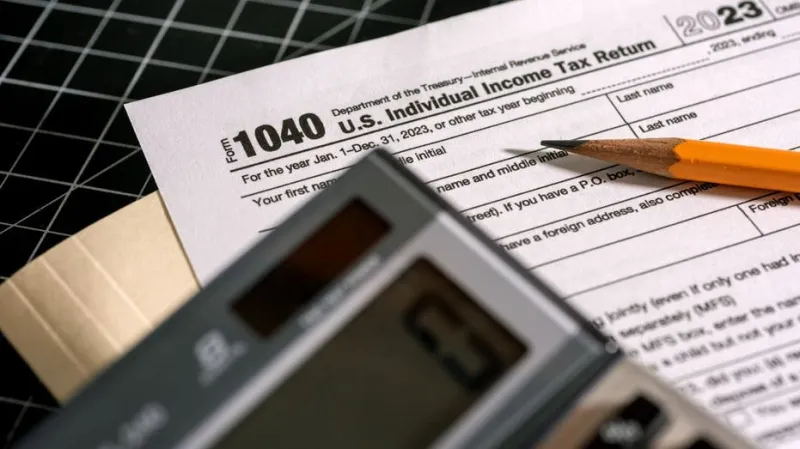
Photo: tax paperwork forms and pen on desk with calculator, casino chips nearby, US tax season, via a57.foxnews.com
There's a specific moment every slot player in the US eventually meets. The reels stop on something loud, the machine starts flashing, a light on top spins, and a floor attendant jogs over with a clipboard and a printer. Then comes the question: "Do you have your ID?"
That's the sound of a W-2G entering your life. Not a jackpot curse, not a scam, just paperwork. And it is far less scary once you know the rules.
This isn't tax advice and I'm not your accountant — for anything with real money on the line, talk to a licensed preparer who knows your state. But if you've ever stood at a casino cage at 11 p.m. wondering what you just signed, this is the calm version.
Why the machine stopped paying you
In the US, a slot win generally becomes "reportable" at $1,200 or more from a single spin. The casino is required to issue a Form W-2G for that.
Here's the part that trips people up: the $1,200 threshold is not reduced by what you put in. If you've been feeding a machine for two hours and finally land $1,300, the reportable number is $1,300 — not $1,300 minus the several hundred you wagered getting there. That feels unfair to a lot of players. It's still how the form works.
And a W-2G isn't the only trigger. Even a win under $1,200 can be reportable if it's part of a pattern the casino is required to track, and — more importantly for you — all gambling winnings are taxable income whether or not you get a form. No W-2G does not mean no tax. It just means nobody handed you the paper.
The 24% question
Two numbers get confused constantly: the reporting threshold and the withholding threshold.
- Reporting (W-2G): roughly $1,200+ on slots.
- Federal withholding: usually kicks in when winnings exceed $5,000 and are at least 300 times the amount wagered on that play. In that case the casino typically withholds 24% before you see the money.
So a $2,000 hit usually means you get the full $2,000 and a form. A $9,000 hit on a $2 spin usually means you get $9,000 minus 24%, plus a form. Both are reportable. Only one has money pulled out up front.
This is the reason so many people get surprised in April. If nothing was withheld, nothing was "handled" — you still owe tax on it at your own bracket rate, which could be higher or lower than 24%.
What a Vietnamese-language portal should be handing you
If you play through an online brand — a QQ188-style Vietnamese-language portal or any offshore site — the flow is different from a land casino, and honestly, it's where players get sloppy.
Here's what good practice looks like, whether the site does it for you or not:
- A downloadable transaction history you can export, not just a scrolling on-screen log.
- A win/loss summary by month, because a screen you screenshot in June is worthless in February.
- Clear labels on what counts as a win versus a bonus credit, since bonus funds and free-spin awards often behave differently.
- Deposit and withdrawal records in the same place, or at least a paper trail you can reconstruct.
If a site can't produce that, treat it as a sign to keep your own records — and honestly, keep your own records even if it can. Casinos have no obligation to be your bookkeeper.
The envelope method that actually survives April
Forget apps for a second. The system that works is boring:
- One folder, physical or cloud. Label it with the year.
- Every W-2G goes in the day you get it. Photograph it before you leave the parking lot; thermal paper fades.
- A simple spin log. Date, casino or site, machine or game name, amount in, amount out. A notes app is fine. Fifteen seconds per session.
- Screenshot every cash-out confirmation. This is the one people skip and regret.
- Keep it all for at least three years after you file. Longer if you're claiming losses as an itemized deduction.
Casino "win/loss statements" are helpful but they're often estimates, they lag, and they sometimes don't reflect what a preparer needs. Your own log is stronger evidence of actual play.
State lines change the math
Federal rules are only half the story. States set their own thresholds, their own withholding rates, and their own treatment of gambling income. A few have no state income tax at all. Others withhold aggressively the moment a form is generated.
Two situations worth flagging before you play:
- You live in one state and play in another. You may owe tax in the state where you won, then get a credit (or not) at home. Keep both records.
- You play online across state lines. Residency rules get messy fast. This is exactly the kind of question a local preparer answers in five minutes and a forum answers wrong for three weeks.
One more thing that changed recently
Tax treatment of gambling losses has been shifting, and for tax years starting in 2026 the rules tightened in ways that affect high-volume players — losses are no longer a simple dollar-for-dollar offset for everyone. If you play enough that your losses are a meaningful line item, this is not a DIY situation. Ask a preparer who has read the current rules, not a guy at the table.
What to do in the parking lot
Not much. That's the point.
- Don't post the W-2G photo with your SSN visible. Ever.
- Don't hand the form to a "helpful" stranger who offers to sort it out.
- Don't assume withholding means you're square with the IRS.
- Do take the photo, log the session, and go home.
A big win should be a good memory, not the start of a paperwork spiral. Two minutes of housekeeping in the moment saves two hours of guessing in the spring.
And if you're playing on a Vietnamese-language portal like QQ188 because the interface and the promos are in a language that feels like home — great, that's a real comfort factor. Just make sure the recordkeeping isn't also in a language only you can decode at tax time. Write it down plain.
Play responsibly. 21+ where applicable. Check your state's rules on online play and gambling income before you deposit.